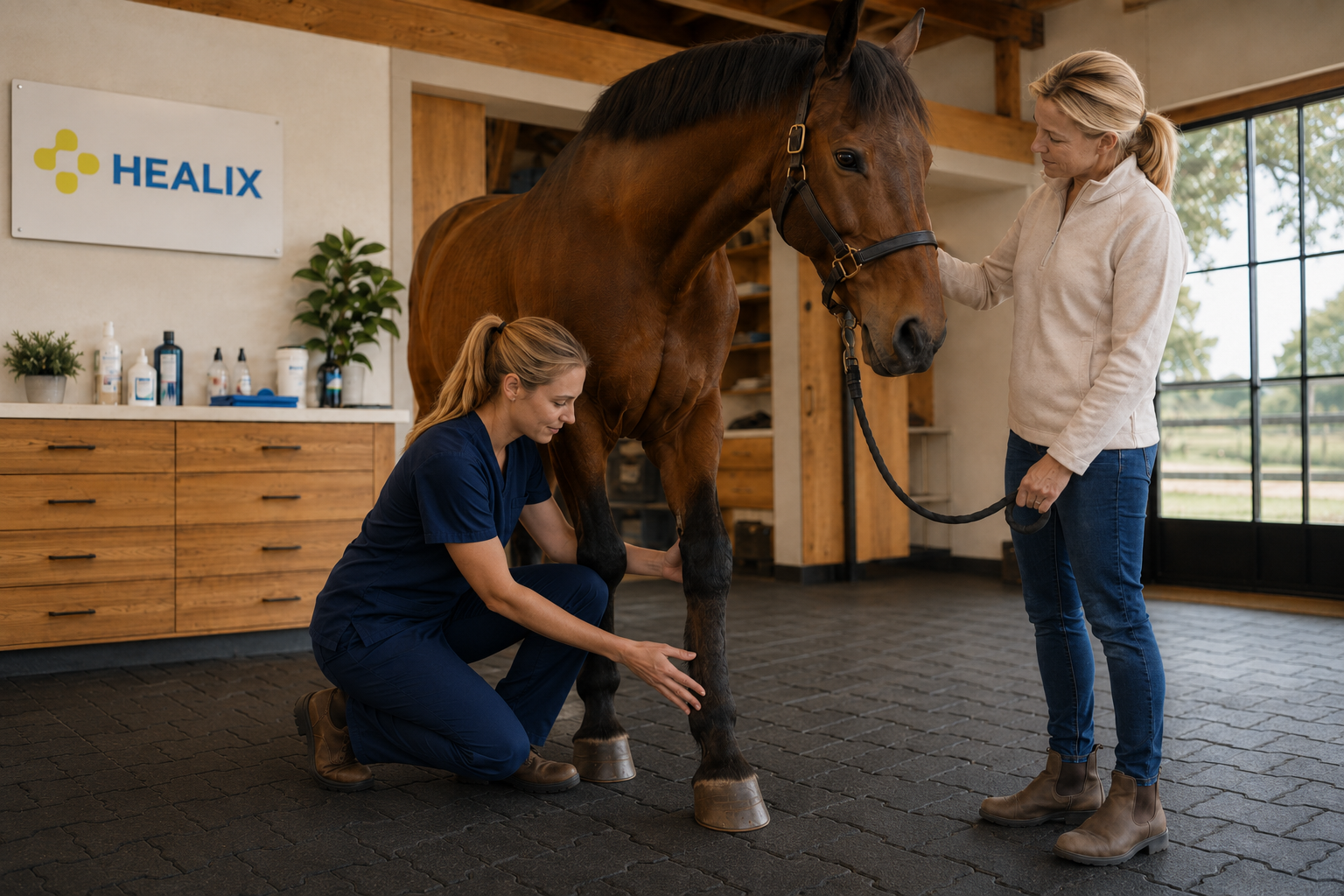
Accelerating Horse Wound Healing with Laser Therapy: A Guide for Owners and Vets
A 2019 systematic review published in Lasers in Medical Science analyzed 68 studies on photobiomodulation therapy for wound healing and found that las…
Read the article
Published December 30, 2024 · 7 min read · Healix Lasers
As horse owners, we constantly strive to provide our equine partners with the best possible care, ensuring their comfort, performance, and overall well-being. Back discomfort is a common challenge for many horses, manifesting in various ways from subtle performance changes to overt sensitivity. When your horse exhibits signs of back soreness, it's natural to explore all available avenues that may offer support. Laser therapy is one such modality that has gained attention in the equine community.
Laser therapy may be considered as one part of a veterinarian-directed plan to support muscle comfort. It's crucial to understand that back soreness can have many causes, including ill-fitting tack, an unsuitable training load, underlying injuries, or even dental issues affecting posture. Therefore, a comprehensive veterinary assessment always comes before choosing any supportive intervention, including light therapy.
When a horse experiences back discomfort, it often involves muscle tension, soreness, or inflammation. These issues can arise from the demands of athletic performance, the stresses of everyday activity, or specific incidents. Laser therapy works by delivering specific wavelengths of light to tissues, which may support cellular function and promote a beneficial response in the body.
While laser therapy does not diagnose or treat any condition, its application may contribute to a horse's overall comfort. Many owners and veterinarians consider it a valuable tool for supporting muscle health and function. It's often used alongside other veterinary-prescribed therapies, such as chiropractic adjustments, massage, stretching, or specific exercise regimens. The goal is always to address the root cause of the discomfort and provide multifaceted support.
The principle behind laser therapy involves photobiomodulation, where light energy is absorbed by cells. This absorption may stimulate various cellular processes, potentially leading to improved tissue response. For muscles in the back, this could mean support for recovery after exertion or general muscle comfort. It's a non-invasive approach that focuses on encouraging the body's natural supportive mechanisms.
Because horses are stoic creatures, subtle signs of back discomfort can easily be overlooked. Regular monitoring of your horse’s attitude, performance, and physical responses to touch can help you identify potential issues early. Early detection and prompt veterinary consultation are key to managing any discomfort effectively.
Identifying the precise reason for your horse's back discomfort is paramount. Changes in performance, sensitivity during grooming or saddling, reluctance to jump or collect, or even a sudden change in temperament can all warrant attention. Your first step should always be to work with your veterinarian and other appropriate equine professionals, such as a qualified saddle fitter or equine chiropractor, to assess your horse thoroughly and establish a comprehensive care plan.
Laser therapy does not replace the need for a professional diagnosis, a structured rehabilitation program, or a thorough saddle-fit evaluation. Instead, it serves as a supportive measure that can be integrated into a broader management strategy. Think of it as one piece of a larger puzzle aimed at restoring your horse's comfort and performance.
A veterinarian can perform a lameness examination, palpate the back, and recommend diagnostics such as X-rays or ultrasound to pinpoint the source of the discomfort. They can also advise on appropriate training modifications, medication, or referral to specialists. Only after a proper diagnosis and care plan are in place should you consider incorporating supportive therapies like laser therapy, and always under veterinary guidance.
Once a veterinary care plan is established, and if light therapy is deemed appropriate, the Questrian range offers tools designed with equine well-being in mind. These devices are developed to provide supportive care, fitting into a routine that prioritizes your horse's comfort.
The Questrian Recovery is a new device for 2026, specifically designed for routine post-exercise muscle support. It features a broad emitting plate, making it ideal for covering larger muscle groups like those in the back and shoulders after a workout. This broad coverage aims to provide general comfort and support, which can be beneficial after intense activity or as part of a regular maintenance routine.
With its Apple-style two-button controls, Questrian Recovery is designed for ease of use. It includes three standard modes, offering structured options for different supportive needs. This device is particularly suited for horse owners looking for a straightforward way to incorporate light therapy into their horse's daily or weekly care regimen, focusing on muscle recovery and comfort.
Learn more about its capabilities: Questrian Recovery
For situations requiring more specific supportive care, the Questrian Pro offers advanced features. This device includes twelve vet-created targeted protocols, which means it provides structured guidance for applying light therapy to particular areas, such as the back and shoulders, in a focused manner. The touchscreen interface allows for intuitive navigation and selection of these protocols.
The Questrian Pro is often utilized under the guidance of a professional, such as a veterinarian or equine therapist, who can direct the application of these targeted protocols based on a horse's specific needs. It's a tool that allows for a more precise application of light therapy, integrating seamlessly into a professionally guided care plan.
Explore the full Questrian laser models: Questrian Laser Models
Find out more about the Questrian Pro: Questrian Pro
Whether you choose the Questrian Recovery for general post-exercise comfort or the Questrian Pro for more targeted support under veterinary guidance, always follow the device manual and your veterinarian’s recommendations for your horse. These devices are designed to be complementary tools within a comprehensive care strategy.
Safety is paramount when using any equipment on your horse. When using Questrian light therapy devices, always use protective eyewear as directed. Both you and your horse should be protected from direct light exposure to the eyes. Additionally, familiarize yourself with and follow all contraindications listed in the device manual. This might include avoiding application over certain areas or conditions, such as tumors or pregnant mares, unless specifically advised by a veterinarian.
Always observe your horse carefully during and after any application of light therapy. Stop immediately and seek veterinary advice if symptoms worsen, your horse shows any signs of distress, or if you notice any adverse reactions. Individual responses to supportive therapies can vary significantly; no device guarantees a specific recovery timeline or outcome. Patience, consistent veterinary oversight, and careful observation are essential.
Keep your Questrian device clean and stored in a safe, dry place when not in use. Follow the manufacturer's guidelines for battery charging and general maintenance to ensure the longevity and proper functioning of your equipment. Regularly inspect the device for any signs of damage or wear, and discontinue use if any issues are detected.
For more detailed safety information, please refer to our dedicated page: Safety Information
Laser therapy, also known as photobiomodulation, involves applying specific wavelengths of light to tissues. This light energy may support cellular function and encourage beneficial responses in the body. For horses, it's often used as a supportive measure to promote comfort, particularly in muscles and soft tissues.
Absolutely not. Laser therapy is a supportive modality, not a diagnostic or treatment tool. Any signs of discomfort, lameness, or performance issues in your horse should always prompt a thorough examination by a licensed veterinarian. Your vet will diagnose the underlying condition and direct the appropriate care plan, which may or may not include supportive therapies like laser therapy.
The frequency and duration of light therapy application should always be determined in consultation with your veterinarian, who understands your horse's specific needs and condition. The Questrian Pro offers vet-created protocols for targeted use, while the Questrian Recovery is designed for routine post-exercise support. Always refer to your device manual and your vet's recommendations.
While generally considered safe when used correctly, there are contraindications. For example, light therapy should typically not be used over areas with active cancer, during pregnancy, or directly over the eyes. Always consult the device manual for a complete list of contraindications and discuss any concerns with your veterinarian before use.
The Questrian Pro features 12 vet-created targeted protocols and a touchscreen interface, designed for more specific applications, often under professional guidance. The Questrian Recovery, new for 2026, has a broad emitting plate and three standard modes with Apple-style two-button controls, making it ideal for routine post-exercise muscle support and general comfort. Both ship free to the lower 48 states.
Yes, both the Questrian Pro and Questrian Recovery devices ship free to the lower 48 states.
Educational content only, not a veterinary diagnosis or treatment recommendation. Your veterinarian should assess your horse and guide any care plan.
Compare the Questrian rangeA 2019 systematic review published in Lasers in Medical Science analyzed 68 studies on photobiomodulation therapy for wound healing and found that las…
Read the article
As a Dressage, Eventing, or Jumper horse owner, keeping your equine athlete in top condition is a top priority. Equine laser therapy has emerged as a…
Read the article
Understand light-based equine care, veterinary guidance and the roles of Questrian Pro and Questrian Recovery.…
Read the articleLet’s find the Questrian laser that fits your horse, your barn, and your routine.