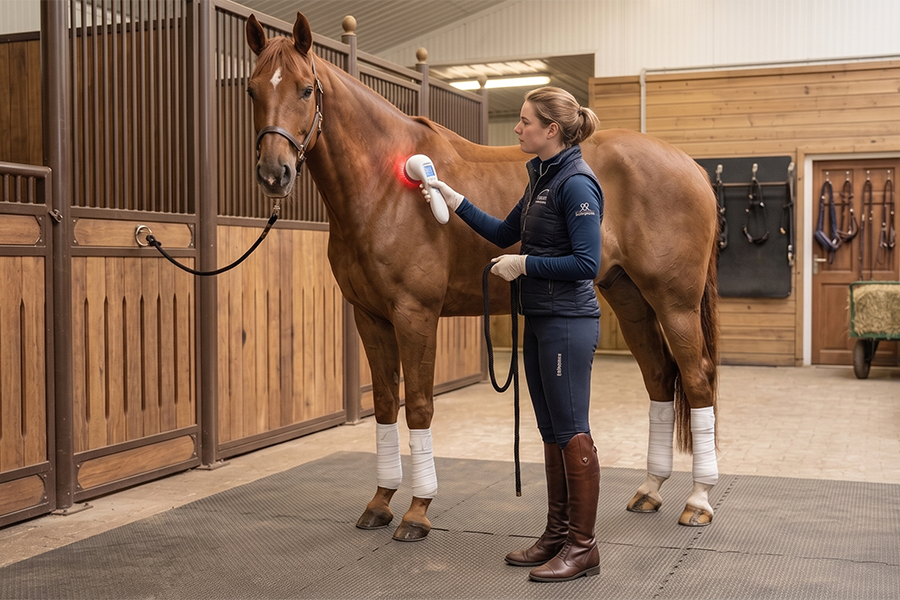
Why Tendon Injuries Sideline Horses—and Why Standard Recovery Falls Short
A 2020 controlled study published in Frontiers in Veterinary Science tracked 12 Warmblood horses with induced superficial digital flexor tendon (SDFT) lesions. Horses receiving high-power laser therapy showed significantly smaller lesion sizes at both 6 and 12 weeks compared to untreated controls, with improved collagen fiber organization documented on ultrasound. This peer-reviewed research represents a growing body of evidence that laser therapy for horse tendon injuries can meaningfully accelerate healing beyond rest and traditional rehabilitation alone.
Published veterinary research demonstrates that high-power laser therapy accelerates tendon healing in horses by increasing cellular energy production and collagen synthesis. The Pluim study documented measurable lesion reduction in treated horses compared to controls, with improved tissue organization and faster return-to-work timelines. For horse owners facing the frustration of extended layoffs, this research offers a science-backed path to supporting recovery.
This article examines the science behind tendon injuries, why they’re notoriously slow to heal, what published research shows about laser therapy’s effectiveness, and how the Healix Questrian™ brings professional-grade photobiomodulation to the barn level.
The Biology of Tendon Injuries: Why Healing Takes So Long
Tendon injuries rank among the most frustrating challenges in equine care. The superficial digital flexor tendon (SDFT) and suspensory ligament absorb enormous forces during movement—a galloping horse generates loads exceeding 10,000 newtons through these structures. When damage occurs, the biological reality is sobering.
Tendons heal slowly because they have limited blood supply compared to muscle tissue. The hypovascular nature of tendon tissue means fewer nutrients, less oxygen, and reduced cellular turnover reach the injury site. A retrospective study of 150 sport horses published in veterinary literature documented that traditional management of SDFT injuries typically requires 6 to 12 months of rest, with re-injury rates ranging from 43% to 67% in racehorses returning to full work.
The healing process itself presents challenges. Tendons initially repair through Type III collagen—a disorganized scar tissue that lacks the tensile strength of healthy Type I collagen. Without intervention to optimize this process, horses often return to work with structurally compromised tissue, explaining the high re-injury rates documented in published research.
Common Tendon and Ligament Injuries in Performance Horses
- Superficial digital flexor tendon (SDFT) strain — the most common tendon injury in sport horses, particularly eventers and racehorses
- Deep digital flexor tendon (DDFT) lesions — often occurring within the hoof capsule, making treatment access challenging
- Suspensory ligament desmitis — affecting the proximal, body, or branch regions, each with different prognosis profiles
- Accessory ligament injuries — frequently occurring alongside SDFT damage
- Bowed tendon — visible swelling indicating significant fiber disruption
Each of these injuries shares common biological limitations: restricted blood flow, slow collagen remodeling, and high mechanical demands during the return-to-work phase. This is precisely where photobiomodulation enters the treatment equation.
How Laser Therapy Works: The Science of Photobiomodulation
Photobiomodulation (PBM) describes a specific cellular mechanism, not a vague wellness claim. When specific wavelengths of light penetrate tissue, they are absorbed by chromophores—particularly cytochrome c oxidase within mitochondria. This absorption triggers a measurable cascade of cellular responses.
Research by Tiina Karu and subsequent investigators established that light absorption by cytochrome c oxidase increases adenosine triphosphate (ATP) production—the fundamental energy currency of cellular function. Increased ATP availability accelerates protein synthesis, including the collagen production critical to tendon repair. Published studies document increased fibroblast proliferation, enhanced angiogenesis (new blood vessel formation), and modulation of inflammatory mediators following PBM application.
Why Wavelength and Power Matter for Tendon Treatment
Not all laser therapy devices are equivalent. Tendon injuries occur deep within limb structures—the SDFT lies beneath skin, subcutaneous tissue, and the tendon sheath. Reaching therapeutic depths requires specific parameters:
- 905nm wavelength — penetrates deepest into tissue, reaching structures 4-5cm below the skin surface where tendon core lesions occur
- 850nm wavelength — optimal absorption by tendons, ligaments, and joint structures
- 635nm wavelength — targets superficial tissue and supports wound healing at the skin level
- 470nm wavelength — provides surface-level antimicrobial effects
Power output determines whether therapeutic photon density reaches target tissue. Low-level laser therapy (LLLT) devices under 500mW often lack sufficient power to penetrate equine limb structures effectively. The Pluim studies utilized high-power laser therapy (HPLT) with combined outputs enabling therapeutic doses at tissue depths relevant to tendon injuries.
The multi-wavelength approach matters because tendon injuries involve multiple tissue layers simultaneously. Surface inflammation, tendon sheath involvement, and core lesions each absorb different wavelengths optimally. A device combining multiple wavelengths addresses the entire injury zone rather than isolated components.
What Published Research Shows: Laser Therapy for Equine Tendon Healing
The evidence base for equine laser therapy has strengthened considerably over the past decade. Key studies warrant specific attention from horse owners evaluating treatment options.
The Pluim Controlled Study (2020)
Published in Frontiers in Veterinary Science, this controlled study induced standardized SDFT lesions in 12 Warmblood horses, then compared high-power laser therapy to untreated controls over 24 weeks. Results documented:
- Significantly smaller lesion cross-sectional area in treated horses at 6 and 12 weeks
- Improved echogenicity scores indicating better tissue organization
- No adverse effects observed throughout the treatment period
This study’s strength lies in its controlled design—induced lesions of known severity, standardized treatment protocols, and objective ultrasound measurements.
The Pluim Retrospective Study
A retrospective analysis of 150 sport horses with naturally occurring soft tissue injuries documented return-to-work rates and re-injury incidence following HPLT treatment. While retrospective data lacks the control of experimental studies, the large sample size provides real-world outcome information that complements controlled research.
Mechanistic Research
Laboratory studies published in journals including Photomedicine and Laser Surgery and Lasers in Medical Science have documented the cellular mechanisms underlying clinical observations. Research confirms increased fibroblast activity, enhanced collagen synthesis, improved collagen fiber alignment, and modulation of inflammatory cytokines following photobiomodulation at therapeutic doses.
Collectively, this research supports laser therapy as a science-backed intervention for tendon injuries—not a replacement for proper veterinary diagnosis and rehabilitation protocols, but a meaningful addition to comprehensive treatment plans.
How the Healix Questrian Supports Tendon Recovery
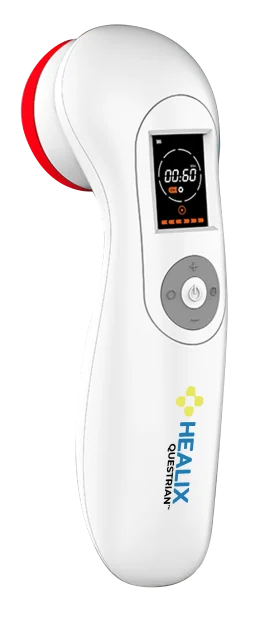
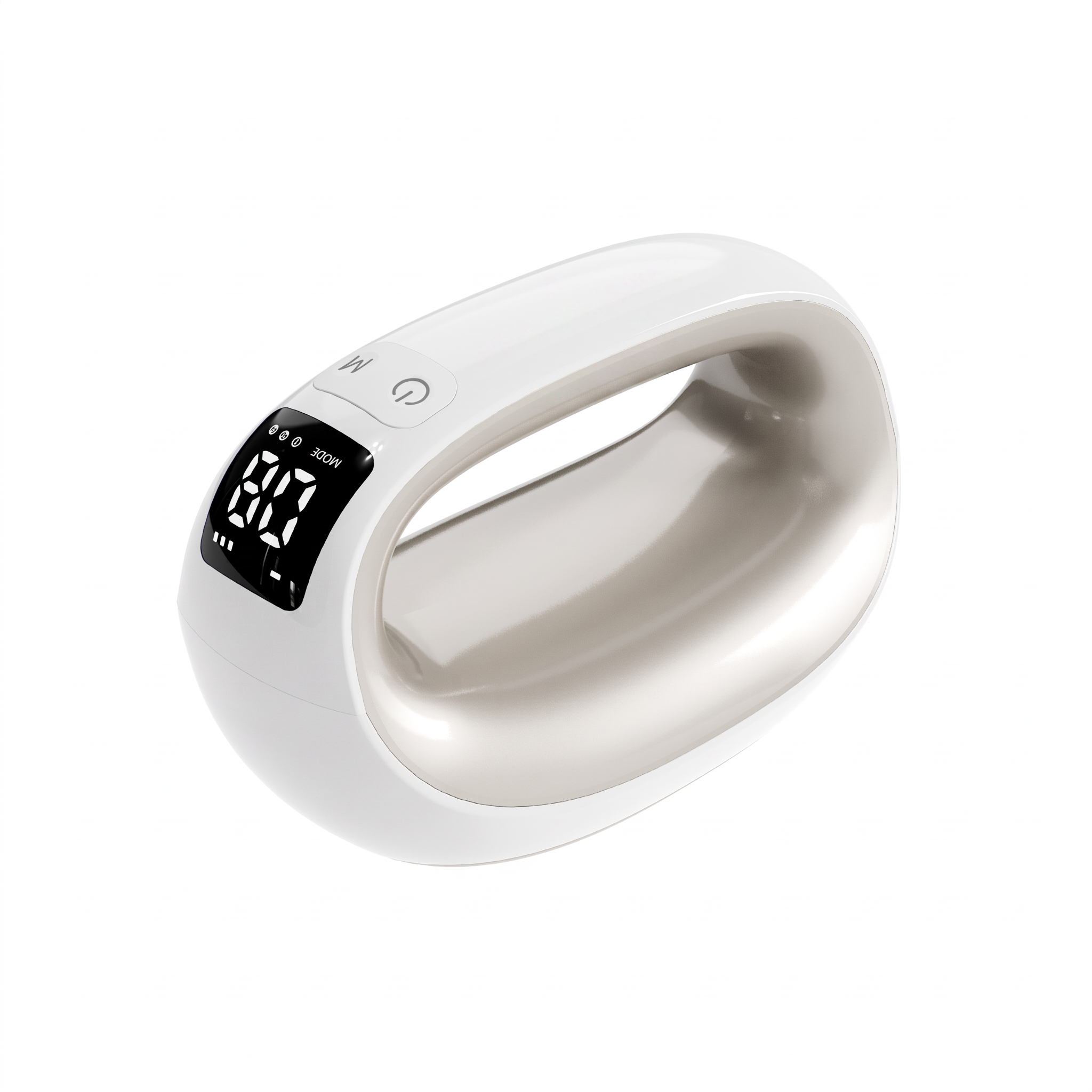
The Healix Questrian™ was engineered specifically for equine therapeutic use, incorporating the wavelengths and power output supported by published research into a portable, barn-ready device.
Technical Specifications Relevant to Tendon Treatment
- 75W total output — high-power delivery enabling therapeutic doses at tendon-depth tissue
- Four therapeutic wavelengths — 905nm (deep penetration), 850nm (tendon/ligament), 635nm (superficial tissue), 470nm (surface treatment)
- 12 pre-programmed equine protocols — including dedicated tendon and ligament treatment settings
- Pulsed and continuous delivery modes — pulsed delivery reduces thermal buildup while maintaining therapeutic photon density
- Portable handheld design — 270g weight, 5000mAh battery, usable in barn aisles or field conditions
The Questrian’s tendon protocol delivers calibrated doses based on published research parameters. Users position the device over the injury site following ultrasound-guided lesion mapping, applying treatment for the protocol-specified duration. The device handles wavelength selection, power modulation, and timing—removing guesswork from the treatment process.
Certifications and Trust Signals
The Healix Questrian is FDA-cleared and CE certified, meeting ISO 13485 and ISO 9001 quality management standards. These certifications confirm the device meets regulatory requirements for medical device manufacturing and safety—important considerations for owners investing in therapeutic equipment.
Supporting your horse’s tendon recovery? Learn how the Healix Questrian brings professional-grade laser therapy to your barn. Explore the Questrian or call 888-775-4676 to discuss your horse’s specific needs.
Integrating Laser Therapy into Tendon Rehabilitation Programs
Laser therapy works best as part of a comprehensive rehabilitation plan developed with your veterinarian. Published research studies integrated HPLT alongside controlled exercise protocols, not as a standalone intervention.
A Typical Integration Approach
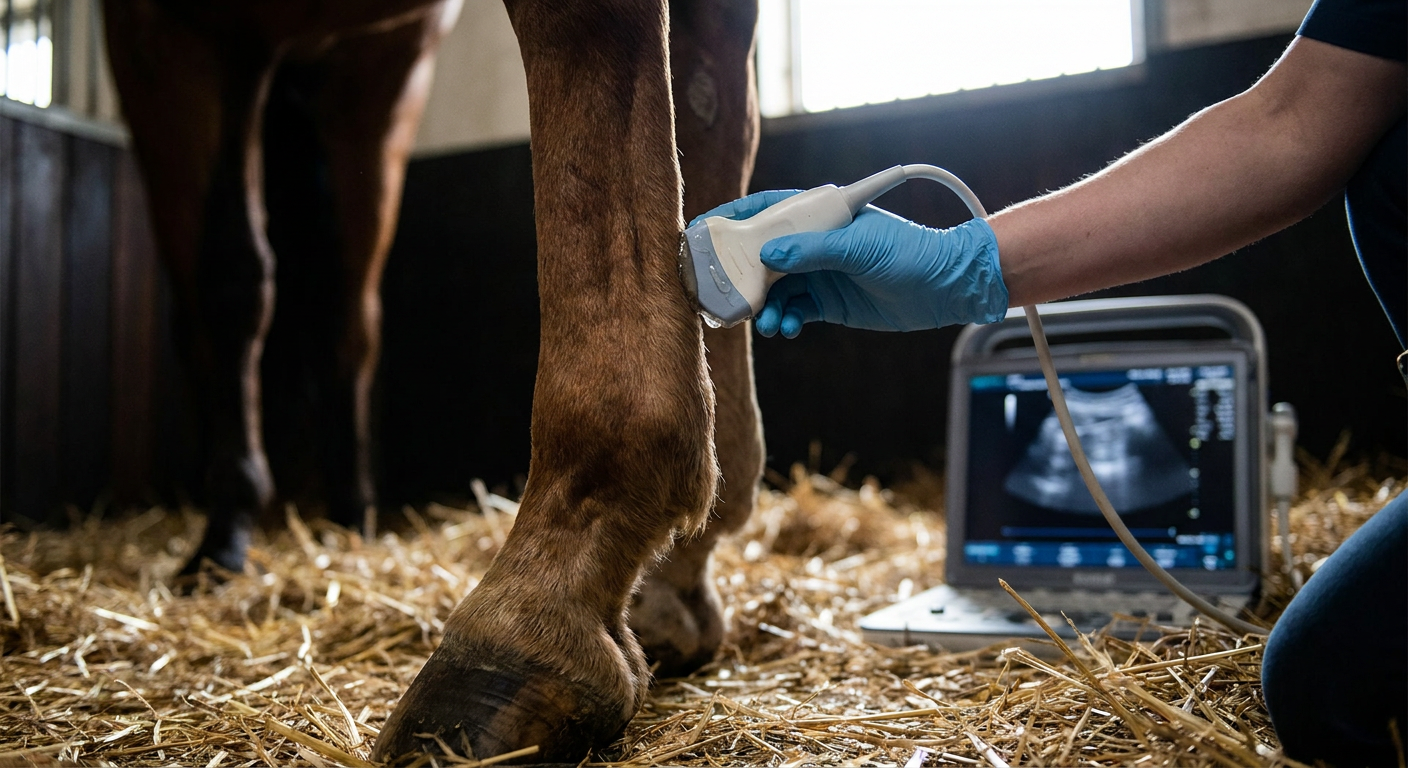
- Veterinary diagnosis — ultrasound examination to characterize lesion location, size, and severity
- Acute phase (weeks 1-4) — daily or every-other-day laser therapy sessions focusing on inflammation modulation and early cellular stimulation
- Proliferative phase (weeks 4-12) — continued laser therapy 3-4 times weekly as collagen production accelerates
- Remodeling phase (months 3-6+) — reduced frequency laser therapy alongside progressive controlled exercise to promote proper collagen alignment
- Return-to-work — maintenance treatments during the graduated return to full work
Treatment frequency and duration depend on injury severity, location, and individual horse response. The Questrian’s pre-programmed protocols provide research-based starting parameters, while veterinary guidance tailors the approach to each case.
Questions Horse Owners Ask About Tendon Laser Therapy
How long does it take for laser therapy to heal a horse tendon?
Tendon healing timelines depend on injury severity, location, and the horse’s individual biology. Published research documented measurable improvements at 6 weeks with continued progress through 12-24 weeks. Laser therapy supports faster healing within the biological constraints of tendon repair—it accelerates the process but cannot bypass the collagen remodeling timeline entirely. Most veterinarians integrate laser therapy into 6-12 month rehabilitation programs, with the goal of stronger tissue organization and reduced re-injury risk rather than simply faster return to work.
Can laser therapy prevent re-injury in horses?
Research suggests improved outcomes relate to tissue quality, not just healing speed. The Pluim study documented better collagen fiber organization in treated horses—a finding relevant to re-injury risk since disorganized scar tissue fails more readily under load. While no intervention guarantees prevention, supporting optimal tissue repair during initial healing represents the most evidence-based approach to reducing re-injury incidence. The Healix Questrian’s protocols are designed to deliver therapeutic doses throughout the entire healing timeline.
How often should horses receive laser therapy for tendon injuries?
Published protocols typically begin with daily or every-other-day treatments during the acute phase, transitioning to 3-4 sessions weekly during active healing, then reducing to maintenance frequency during return to work. Treatment duration per session ranges from 5-15 minutes depending on lesion size and depth. The Questrian’s pre-programmed protocols incorporate research-based parameters, though your veterinarian may adjust frequency based on ultrasound monitoring and clinical response.
Beyond Tendons: Other Treatable Conditions
While tendon injuries represent a primary application, the Healix Questrian supports treatment for multiple equine conditions:
- Suspensory ligament injuries and desmitis
- Joint inflammation and arthritis
- Hock and stifle soreness
- Back pain and muscle strain
- Wound healing and surgical incision recovery
- Edema and post-exercise inflammation
For horse owners managing multiple conditions or multiple horses, barn-level access to professional-grade laser therapy provides flexibility that clinic-only treatment cannot match. Learn more about recognizing when your horse needs more than rest.
Making the Decision: Is Laser Therapy Right for Your Horse?
The Pluim controlled study’s findings—significant lesion reduction at 6 and 12 weeks, improved tissue organization, no adverse effects—represent the kind of evidence that supports informed treatment decisions. For horse owners facing the frustration of extended layoffs, the financial burden of lost training time, and the anxiety of re-injury risk, laser therapy offers a research-backed addition to rehabilitation protocols.
The question isn’t whether laser therapy works—published veterinary research demonstrates measurable benefits. The question is whether professional-grade treatment access fits your situation. Clinic visits provide veterinary oversight but require scheduling and transport. Barn-level devices like the Healix Questrian enable consistent treatment delivery when healing biology demands it, with the same wavelengths and power output used in published research.
Your veterinarian remains the essential partner in tendon rehabilitation. Ultrasound monitoring tracks healing progress. Controlled exercise protocols guide the return to work. Laser therapy supports the cellular processes underlying recovery—it doesn’t replace professional oversight.
Ready to explore how the Healix Questrian can support your horse’s recovery? Visit the product page for complete specifications, or call 888-775-4676 to discuss your horse’s specific situation with our team.
Frequently Asked Questions
Does laser therapy actually work for horse tendon injuries?
Yes. A controlled study published in Frontiers in Veterinary Science documented significantly smaller tendon lesions and improved tissue organization in horses receiving high-power laser therapy compared to untreated controls. The research demonstrates measurable benefits when appropriate wavelengths and power outputs reach therapeutic tissue depths.
How deep does laser therapy penetrate for tendon treatment?
Therapeutic penetration depends on wavelength and power output. The Healix Questrian uses 905nm wavelength light that penetrates 4-5cm below the skin surface—deep enough to reach SDFT core lesions. Lower-power devices may not achieve therapeutic photon density at tendon depth in equine limbs.
Can I use laser therapy on my horse without a veterinarian?
While the Healix Questrian is designed for barn-level use, veterinary diagnosis should precede treatment. Ultrasound examination characterizes injury severity and location, guiding appropriate treatment protocols. Laser therapy supports healing but doesn’t replace professional diagnosis or rehabilitation planning.
Is the Healix Questrian FDA-cleared for equine tendon treatment?
The Healix Questrian is FDA-cleared and CE certified, meeting ISO 13485 and ISO 9001 quality standards. The device includes 12 pre-programmed equine protocols, including dedicated tendon and ligament settings based on published research parameters for wavelength and dose delivery.
How soon after a tendon injury should laser therapy begin?
Published protocols typically begin laser therapy within the first week post-injury, during the acute inflammatory phase. Early intervention supports inflammation modulation and cellular stimulation. Your veterinarian can advise on timing based on injury severity and your horse’s specific situation.
This article is for informational purposes only and does not constitute veterinary advice. The information provided reflects published veterinary research on photobiomodulation and Healix Lasers’ product documentation. Treatment outcomes vary by horse, condition, and severity. Consult a licensed veterinarian before beginning any new therapy. The Healix Questrian™ is an FDA-cleared, CE-certified device designed for equine therapeutic use. For current product information, visit healixlasers.com or call 888-775-4676.