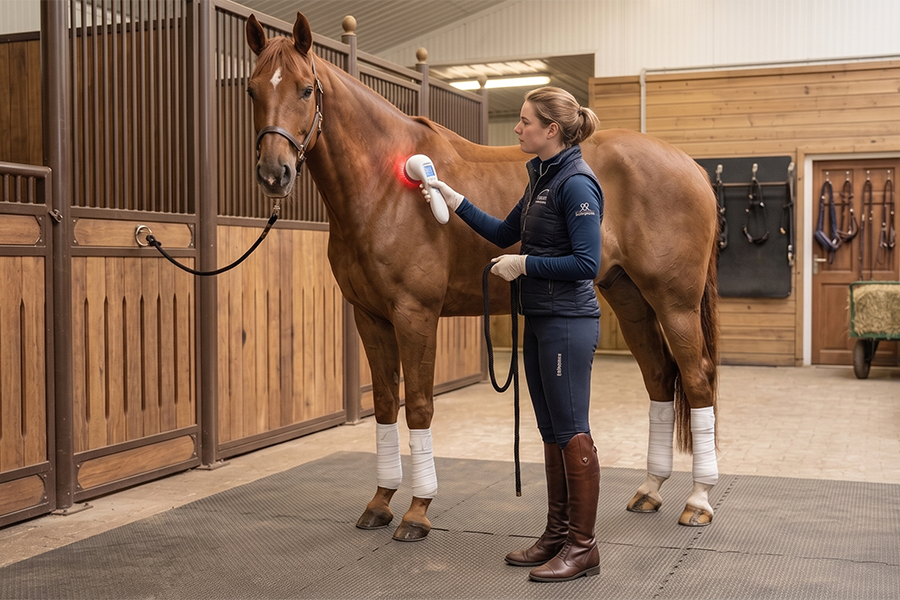
A 2020 controlled study published in Frontiers in Veterinary Science tracked 12 Warmblood horses with induced superficial digital flexor tendon lesions, finding that those treated with high-power laser therapy showed significantly smaller lesion sizes and improved ultrasonographic scores compared to untreated controls. This research represents a growing body of evidence supporting advanced therapeutic technologies in equine rehabilitation.
Advanced equine therapy technologies include high-power laser therapy (photobiomodulation), extracorporeal shockwave therapy, and hyperbaric oxygen chambers. Among these, photobiomodulation has emerged as particularly promising, with peer-reviewed veterinary research documenting accelerated soft tissue healing, reduced inflammation, and faster return to performance in sport horses.
For horse owners and trainers seeking alternatives to extended stall rest and traditional rehabilitation, understanding which technologies deliver measurable results—and which remain unproven—is essential. This article examines the current landscape of advanced equine therapy technologies, the science behind their mechanisms, and how devices like the Healix Questrian™ are bringing professional-grade treatment to barns and veterinary practices.
The Challenge of Equine Injury Recovery
Soft tissue injuries remain among the most significant career-limiting conditions in sport horses. Superficial digital flexor tendon (SDFT) injuries alone affect an estimated 8-43% of racehorses during their careers, according to published research in the Equine Veterinary Journal. The recurrence rate for these injuries ranges from 23% to over 60%, depending on the discipline and rehabilitation approach.
Traditional rehabilitation protocols typically require 9-12 months of controlled exercise progression. During this period, horse owners face mounting costs: stall boarding fees, reduced training capacity, missed competition seasons, and the emotional toll of watching a horse sidelined. A 2019 analysis in Equine Veterinary Education estimated that a single significant tendon injury can cost performance horse owners between $10,000 and $50,000 in direct veterinary care and lost training time—before accounting for missed earnings.
The biological challenge is substantial. Tendon tissue has limited vascular supply, which slows the delivery of oxygen, nutrients, and reparative cells to damaged structures. Ligaments face similar constraints. Conventional approaches—rest, controlled exercise, anti-inflammatory medications—address symptoms and prevent re-injury but do little to accelerate the cellular repair process itself.
This gap between what traditional rehabilitation offers and what horse owners need has driven significant interest in advanced therapeutic technologies. The question is which technologies deliver documented, repeatable results rather than theoretical benefits.
The Science of Photobiomodulation in Equine Therapy
Photobiomodulation (PBM), also known as laser therapy or low-level light therapy, represents one of the most thoroughly researched advanced technologies in equine rehabilitation. The mechanism operates at the cellular level through a well-documented biological pathway.
When specific wavelengths of light penetrate tissue, they are absorbed by cytochrome c oxidase, an enzyme within the mitochondria of cells. This absorption triggers a cascade of cellular responses: increased adenosine triphosphate (ATP) production, enhanced cellular metabolism, and upregulation of growth factors involved in tissue repair. Published research has documented these effects across multiple species and tissue types.
Wavelength and Tissue Penetration
Different wavelengths reach different tissue depths, which is why advanced laser therapy devices use multiple wavelengths rather than a single light source:
- 905nm (near-infrared, pulsed): Penetrates deepest into tissue, reaching tendons, ligaments, and joint structures
- 850nm (near-infrared, continuous): Targets intermediate tissue depths, effective for muscle and connective tissue
- 635nm (visible red): Addresses superficial structures and wound healing at the skin surface
- 470nm (blue): Provides surface-level antimicrobial effects and supports wound care
A 2018 systematic review in Lasers in Medical Science examined the evidence for PBM across species and found consistent support for anti-inflammatory effects, accelerated tissue repair, and modulation of pain pathways. The review noted that treatment parameters—wavelength, power density, treatment duration, and frequency—significantly influence outcomes.
Equine-Specific Research
Veterinary researcher M. Pluim and colleagues have conducted some of the most rigorous equine-specific PBM research to date. A retrospective study of 150 sport horses with soft tissue injuries documented that those receiving high-power laser therapy showed faster return to previous performance levels compared to horses treated with conventional rehabilitation alone.
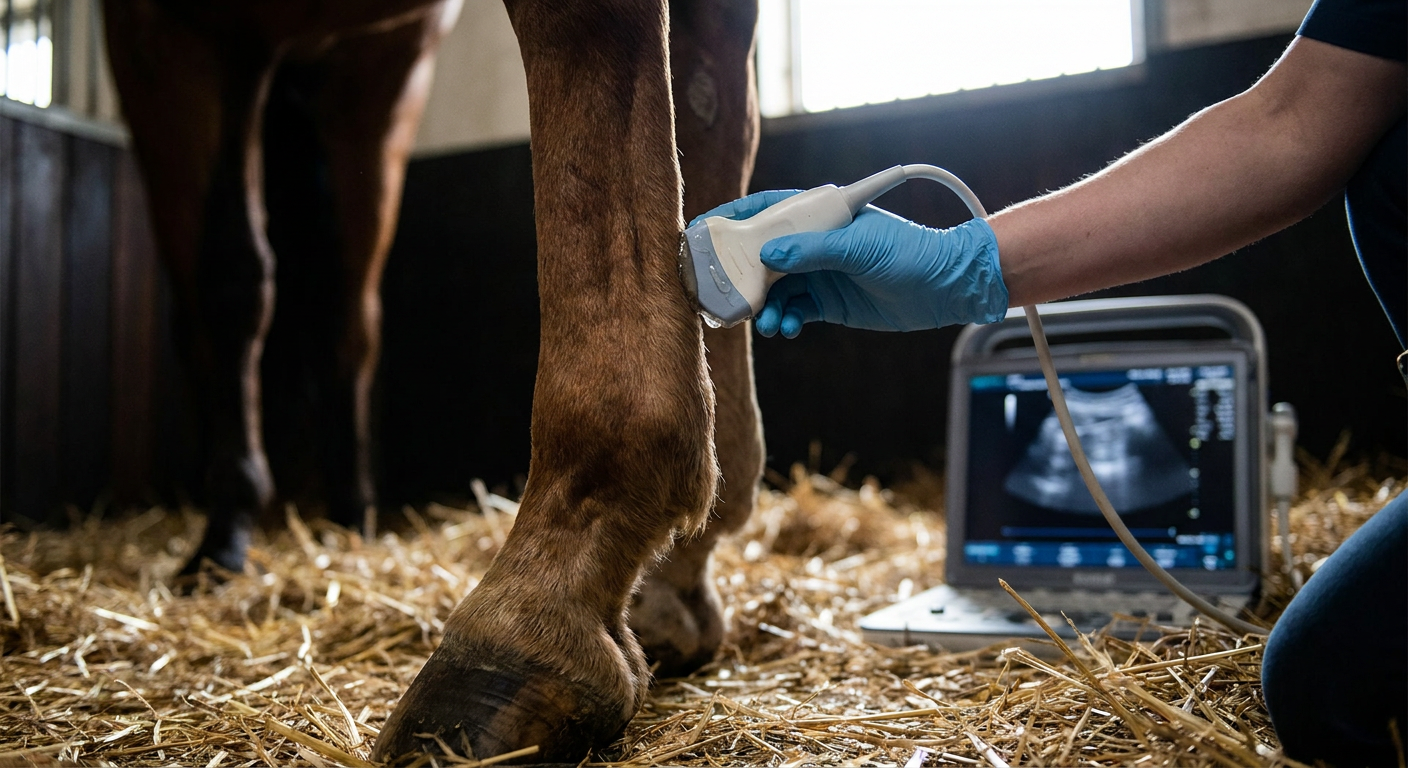
The 2020 controlled study in Frontiers in Veterinary Science built on this foundation with a prospective design: researchers induced standardized SDFT lesions in Warmblood horses, then assigned half to receive high-power laser therapy while the other half served as controls. Ultrasonographic assessment at multiple timepoints showed significantly reduced lesion cross-sectional areas in the treated group.
These findings align with the broader photobiomodulation literature while providing equine-specific dosing parameters and treatment protocols.
Comparing Advanced Equine Therapy Technologies
Beyond photobiomodulation, several other technologies have gained attention in equine rehabilitation. Understanding their mechanisms, evidence base, and practical considerations helps horse owners and veterinarians make informed decisions.
Extracorporeal Shockwave Therapy (ESWT)
ESWT delivers acoustic pressure waves to tissue, creating mechanical stress that stimulates cellular repair mechanisms. Published research supports its use for certain conditions, particularly proximal suspensory desmitis and bone-related pathologies.
Considerations: ESWT requires specialized equipment typically found only in veterinary hospital settings. The FEI regulates its use in competition horses due to its analgesic effects, requiring a withdrawal period before competition. Some horses require sedation during treatment.
Hyperbaric Oxygen Therapy (HBOT)
HBOT involves placing the horse in a pressurized chamber filled with increased oxygen concentrations. The elevated pressure drives oxygen deeper into tissues, theoretically accelerating healing in oxygen-depleted injury sites.
Considerations: HBOT requires specialized chambers available only at select equine hospitals. Treatment sessions can last 60-90 minutes, requiring significant time commitment. The research base in horses, while promising for certain wound types, is less extensive than the photobiomodulation literature.
Pulsed Electromagnetic Field Therapy (PEMF)
PEMF devices deliver electromagnetic fields intended to stimulate cellular activity. Various blankets, boots, and wrap systems are marketed for equine use.
Considerations: The equine research base for PEMF is limited compared to photobiomodulation. Device quality and specifications vary significantly across products. Published veterinary studies have produced mixed results depending on the condition treated and device parameters used.
High-Power Laser Therapy
High-power laser therapy, also called Class IV laser therapy, delivers therapeutic light at sufficient power to reach deep tissue structures within practical treatment timeframes. This distinguishes it from earlier low-level laser therapy (LLLT) devices that required extended treatment sessions to deliver therapeutic doses.
Considerations: Device quality and specifications vary significantly. Professional-grade devices with multiple wavelengths, appropriate power output, and pre-programmed protocols based on published research offer advantages over lower-specification alternatives. Portable designs enable barn-level treatment, reducing the need to transport horses to veterinary facilities.
How the Healix Questrian Addresses Equine Therapy Needs
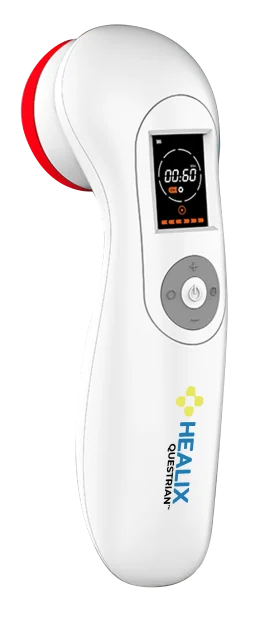
The Healix Questrian™ was designed specifically for equine applications, incorporating the research-supported parameters from published veterinary studies into a barn-ready device.
Technical Specifications
The Questrian delivers 75 watts of total output across four therapeutic wavelengths:
- 905nm: Deep tissue penetration for tendon and ligament structures
- 850nm: Joint and muscle tissue targeting
- 635nm: Superficial wound healing and skin conditions
- 470nm: Antimicrobial surface treatment
This multi-wavelength approach addresses the full depth of tissue involvement typical in equine soft tissue injuries, from the damaged tendon core to surrounding inflammatory tissue at the surface.
Pre-Programmed Protocols
The Questrian includes 12 pre-programmed equine treatment protocols developed based on published research parameters. These protocols specify appropriate treatment durations, power settings, and delivery modes (continuous vs. pulsed) for common equine conditions including tendon injuries, ligament damage, joint inflammation, and wound care.
This protocol-based approach removes guesswork and ensures consistent dosing—a critical factor in achieving the outcomes documented in veterinary research.
Practical Design for Barn Use
At 270 grams with a 5000mAh battery, the Questrian is genuinely portable. It operates without connection to electrical outlets, enabling treatment in stall aisles, wash racks, or wherever the horse is most comfortable. The handheld design allows precise targeting of treatment areas.
The device is FDA-cleared, CE certified, and manufactured under ISO 13485 and ISO 9001 quality management systems—the same certifications required of medical device manufacturers for human therapeutic equipment.
See how the Healix Questrian can support your horse’s recovery. Learn more at healixlasers.com/product/questrian-equine-laser-therapy or call 888-775-4676.
How Does Laser Therapy Work on Horses?
Laser therapy works on horses through the same photobiomodulation mechanism documented in laboratory and clinical research: light energy is absorbed by cellular mitochondria, triggering increased ATP production and a cascade of repair-promoting cellular responses. In horses, the primary challenge is delivering sufficient light energy through skin, hair coat, and subcutaneous tissue to reach deep structures like tendons and ligaments.
High-power devices like the Healix Questrian™ address this by delivering therapeutic doses at wavelengths specifically selected for tissue penetration. The 905nm and 850nm wavelengths reach the deep tissue structures most commonly involved in equine soft tissue injuries.
Is Photobiomodulation Safe for Equine Use?
Published veterinary research has documented a strong safety profile for photobiomodulation in horses when used according to established protocols. The 2020 Pluim study in Frontiers in Veterinary Science reported no adverse effects in treated horses. Proper use involves avoiding direct eye exposure (protective eyewear is standard) and following device-specific treatment parameters.
The Healix Questrian is FDA-cleared for therapeutic use, indicating it meets federal safety and efficacy standards. As with any therapeutic device, treatment should follow manufacturer guidelines and veterinary recommendations for the specific condition being addressed.
What Injuries Respond Best to Equine Laser Therapy?
Published research shows the strongest evidence for photobiomodulation in soft tissue injuries: superficial digital flexor tendon lesions, suspensory ligament injuries, and other connective tissue damage. These structures benefit from the increased cellular metabolism, enhanced blood flow, and anti-inflammatory effects documented in PBM research.
Secondary applications with supporting evidence include joint inflammation (arthritis, synovitis), wound healing, and muscle soreness. The multi-wavelength approach allows different tissue depths and injury types to be addressed with the same device.
For a deeper look at recognizing when horses need intervention beyond rest, see 5 Signs Your Horse Needs More Than Rest.
Integrating Advanced Technology into Your Horse’s Care
The landscape of equine therapy technologies has expanded significantly, but not all innovations carry equal evidence. Photobiomodulation stands out for its documented mechanisms, peer-reviewed veterinary research, and practical application at the barn level.
For horse owners navigating soft tissue injuries, the combination of published research support and accessible device design makes high-power laser therapy worth serious consideration. The same Frontiers in Veterinary Science study that documented reduced lesion sizes in treated horses points toward a future where advanced therapeutic technology is a standard component of equine rehabilitation—not an exotic add-on available only at referral hospitals.
Understanding the true cost of slow recovery in performance horses makes the value of effective therapeutic technology clearer. Time lost is opportunity lost—for the horse, the owner, and the training program.
Ready to bring professional-grade equine laser therapy to your barn? Explore the Healix Questrian™ at healixlasers.com or call 888-775-4676 to speak with a product specialist.
This article is for informational purposes only and does not constitute veterinary advice. The information provided reflects published veterinary research on photobiomodulation and Healix Lasers’ product documentation. Treatment outcomes vary by horse, condition, and severity. Consult a licensed veterinarian before beginning any new therapy. The Healix Questrian™ is an FDA-cleared, CE-certified device designed for equine therapeutic use. For current product information, visit healixlasers.com or call 888-775-4676.
Frequently Asked Questions
How often should I use laser therapy on my horse?
Treatment frequency depends on the condition and its severity. For acute soft tissue injuries, published protocols typically recommend daily or every-other-day treatment during the initial healing phase, transitioning to 2-3 times weekly as healing progresses. The Healix Questrian™ includes pre-programmed protocols that specify appropriate treatment schedules for different conditions.
Does laser therapy help with suspensory ligament injuries in horses?
Published veterinary research supports photobiomodulation for suspensory ligament injuries. The mechanism—increased cellular metabolism and reduced inflammation—applies to ligament tissue similarly to tendon tissue. The Healix Questrian™ includes protocols specifically designed for ligament treatment, using wavelengths that penetrate to the appropriate tissue depth.
Can I use the Healix Questrian without veterinary training?
Yes. The Healix Questrian is designed for use by horse owners and trainers, not only veterinary professionals. The 12 pre-programmed protocols remove the complexity of determining treatment parameters—you select the appropriate protocol for your horse’s condition and the device delivers the researched dosing automatically.
Is the Healix Questrian FDA-cleared for equine use?
The Healix Questrian™ is FDA-cleared, CE certified, and manufactured under ISO 13485 and ISO 9001 quality management systems. These certifications indicate the device meets established safety and manufacturing standards for therapeutic medical devices.
How does high-power laser therapy compare to PEMF blankets for horses?
High-power laser therapy and PEMF operate through different mechanisms and have different evidence bases. Published veterinary research on photobiomodulation, particularly for soft tissue injuries, is more extensive than the equine PEMF literature. Laser therapy allows precise targeting of specific injury sites, while PEMF blankets provide broader, less targeted application.